
School canteens as a driver for family farming
How can school canteens become a lasting market for local producers and a source of economic opportunities for young people? This question was central to the webinar organised on 20 October 2026 as part of the continental exchange platform of the Pan-African Farmers’ Organization (PAFO), with support from the Andreas Hermes Akademie (AHA).
The meeting brought together 55 participants, 53 of whom stayed until the end. Opening remarks by PAFO and the Sub-Regional Platform of Farmers’ Organisations of Central Africa (PROPAC) stressed the importance of bringing together farmers’ organisations, young agricultural entrepreneurs, schools and development partners.
Among the experiences presented, the National Consultation of Farmers’ Organizations in Cameroon (CNOP-CAM) showed how a farmers’ organisation can help structure school supply chains and promote products from family farms.
A practical experience led by CNOP-CAM in Cameroon
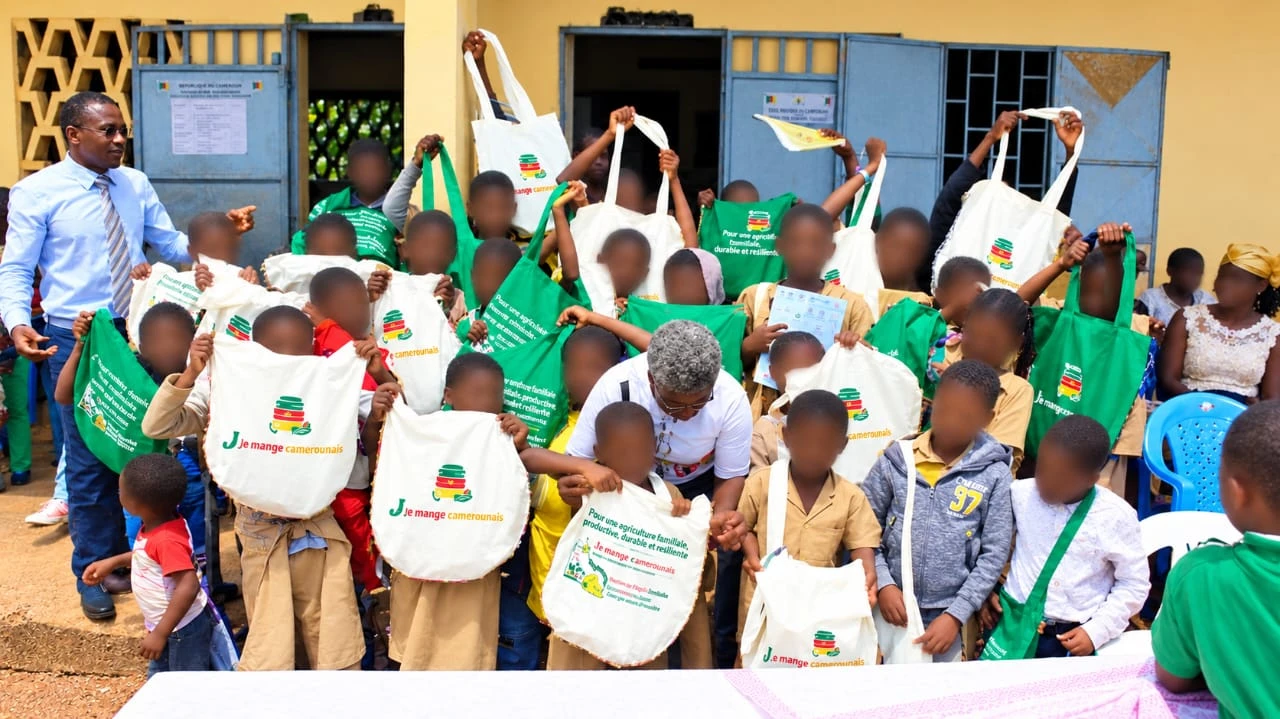
During the meeting, Her Excellency Ms Élisabeth Atangana, FAO Special Ambassador for Cooperatives and President of CNOP-CAM, presented the Cameroonian experience through the TAFS programme — described in the presentation as “Transforming the African system to make it sustainable” — and the “Je Mange Camerounais” campaign.
The presentation highlighted the role of farmers’ organisations in connecting producers, aggregating food supplies and delivering local products to school canteens. It forms part of a broader effort to promote family farming and the consumption of local products, notably through the “Je Mange Camerounais” campaign.
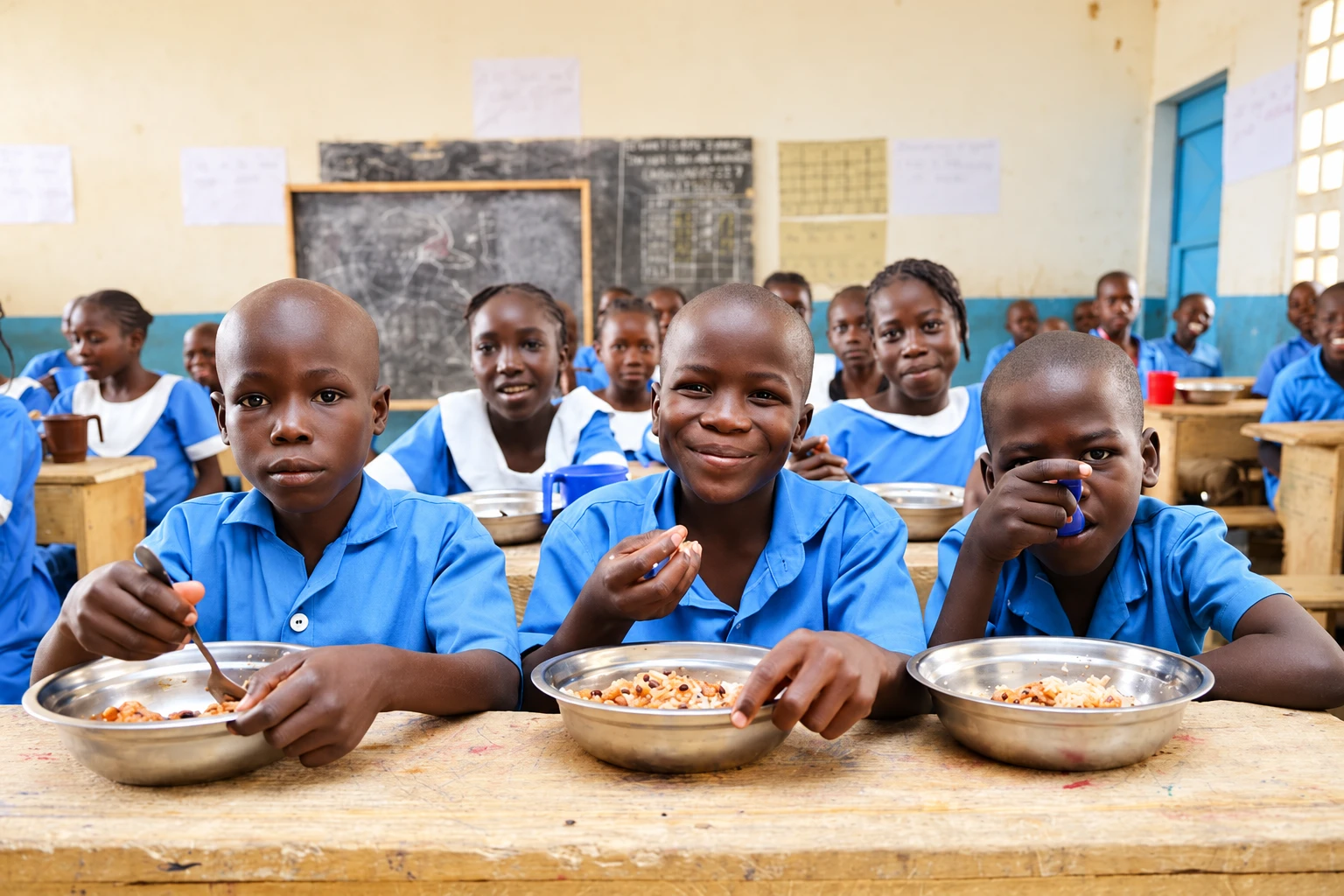
Four schools supplied with local products in Ntui
The experience presented concerns Ntui, in the Mbam-et-Kim division. The arrangement involves, in particular, GIC CHASAADD and SOCOCUVIMK in supplying four public schools: EP Nguila, EP Ntui-ville, EP Tamba and EP Ndimi.
The figures presented for the period from 28 September to 2 October 2026 provide a practical snapshot of the activity:
1,837 pupils covered by the orders presented;
18 local food products involved;
XAF 2,107,039 invoiced to the World Food Programme (WFP).
These figures illustrate the capacity of farmers’ organisations to bring together a varied supply and meet the needs of an institutional market. They refer to the documented period and must not be read as annual results or as the total number of pupils benefiting from the scheme.
A collective approach to managing supplies
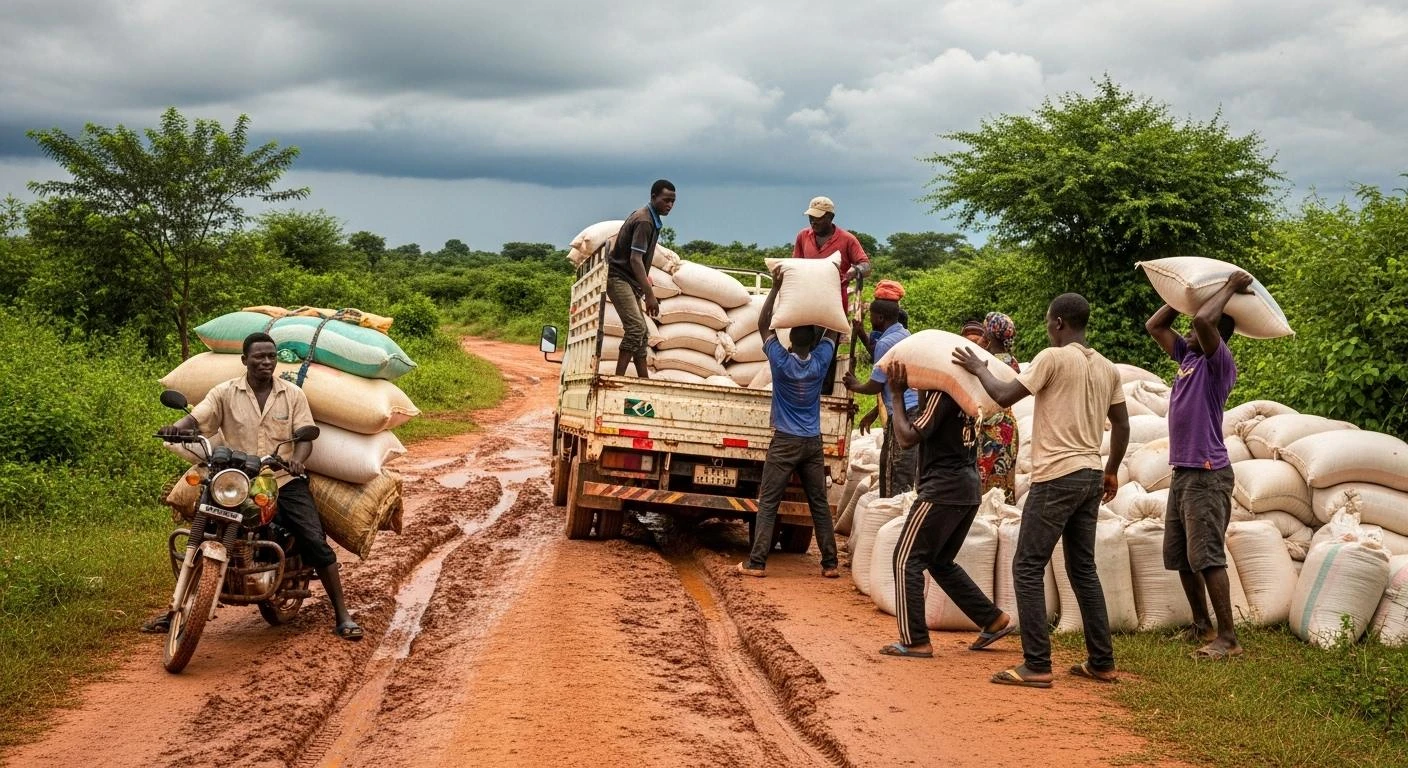
The arrangement relies on a division of tasks between producers and their organisation. Producers provide the food available, while the farmers’ organisation aggregates supplies, makes up any shortfalls where necessary, coordinates storage and transport, and organises deliveries to schools.
Orders and deliveries are documented before invoicing. This collective approach coordinates contributions from several producers and helps meet an institutional buyer’s requirements.
Beyond product sales, the experience demonstrates the economic role of farmers’ organisations: they structure supply, help family farms access markets and organise the operations needed to connect production with consumers.
Encouraging results and constraints that need to be addressed
The Ntui experience also highlights several difficulties that can undermine the sustainability of supplies.
Transport costs are not always covered, storage capacity remains limited, and farmers’ organisations sometimes have to prefinance purchases while waiting for invoices to be paid. Differences between anticipated pupil numbers and schools’ actual needs can also complicate delivery planning.
These constraints show that access to an institutional market does not, on its own, guarantee profitability. For producers to benefit from these outlets over time, logistics costs must be taken into account and payment arrangements must be sufficiently predictable.
The improvements identified include integrating logistics costs into orders, establishing working capital funds or advance payment mechanisms, developing local storage facilities, pooling transport and adjusting order quantities to schools’ actual needs.
These measures are essential to consolidate supply chains and prevent farmers’ organisations from bearing all the financial risks of supplying school canteens.
“Je Mange Camerounais”: connecting local production with consumers
The “Je Mange Camerounais” campaign complements these efforts by promoting local products and their place in people’s diets. It underlines that developing family farming depends not only on the ability to produce, but also on markets, functioning distribution channels and demand for national products.
For CNOP-CAM, this means both recognising producers’ work and creating favourable economic conditions for their activities. School canteens offer a potential market for local products, provided that volumes, quality requirements, delivery schedules and payment arrangements reflect the realities of family farms.
Promoting local products also requires greater consumer awareness, support for a varied diet and closer alignment between schools’ needs and seasonal availability in their surrounding areas.
Young people across the value chain
The webinar discussions recalled that youth agricultural entrepreneurship extends beyond production. School canteens’ needs can also open up opportunities in collection, aggregation, storage, transport, processing, distribution and marketing.
These activities offer young people opportunities for economic inclusion, provided they have appropriate support, technical and entrepreneurial training, equipment, accessible finance and sufficiently predictable markets.
Strengthening incubation centres, supporting young people’s entry into working life and providing agroecology training can help build their skills and support viable agricultural enterprises.
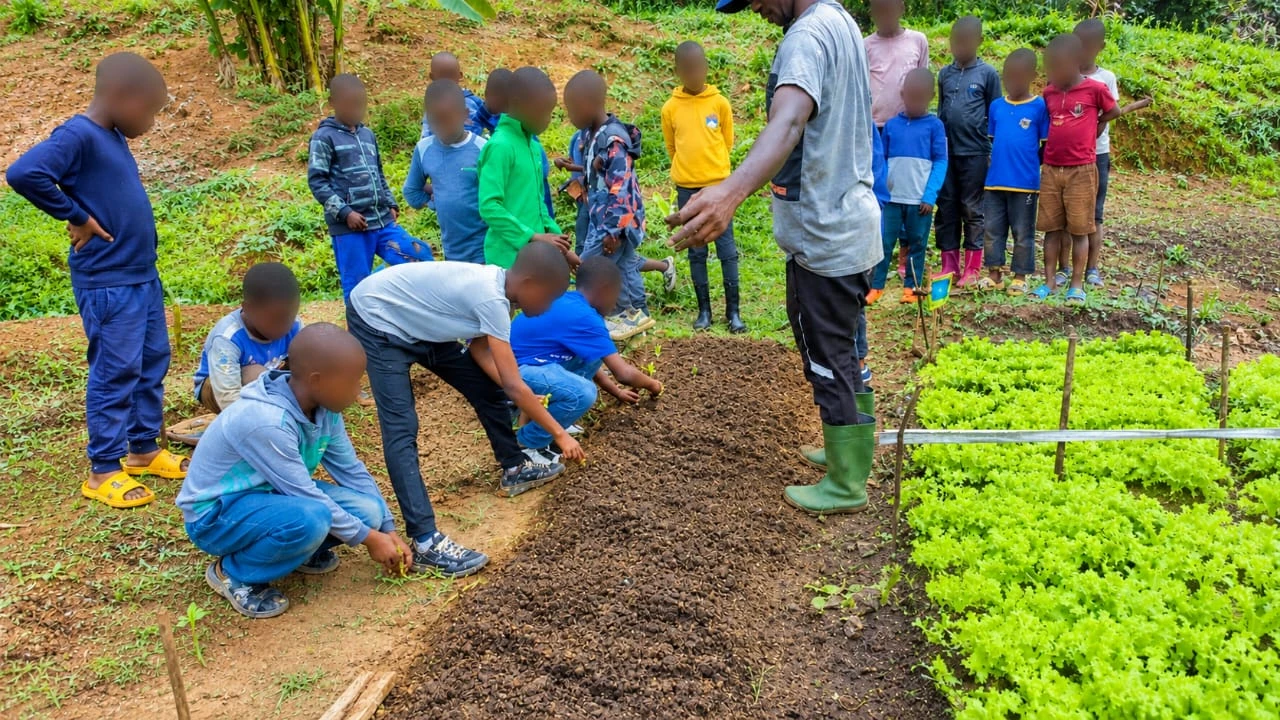
Introducing children to agricultural occupations offers a complementary approach. School gardens and farm visits connect younger generations with agriculture, share knowledge and raise awareness of occupations in food production and processing.
From this perspective, school canteens can become a driver of local development: they support demand for agricultural products, encourage collective producer organisation and can help create economic activities around local food systems.
Lessons shared across the region
Experiences from Burundi and the Democratic Republic of the Congo (DRC), also presented during the webinar, enriched the discussions by illustrating other ways of connecting family farming, local consumption and collective catering.
For Burundi, the 2024 reference figures presented during the meeting covered more than 753,000 children in 885 schools, around USD 6.8 million injected into the local economy, and 40% of WFP food purchases for school meals sourced locally. These figures relate to 2024 and are not updated data for 2026.
This experience particularly highlights the importance of anticipating schools’ needs, informing producers early enough and structuring relations with cooperatives to facilitate crop and delivery planning.
In the DRC, the “Food Sovereignty Restaurant” initiative, presented by the association of young agricultural entrepreneurs within COPACO-PRP, illustrated how catering and food processing can promote family farm products and create markets. The examples also highlighted the importance of controlling transport and preservation costs and raising consumer awareness of local products.
For CNOP-CAM, these experiences reinforce the value of stronger value-chain organisation, logistics capacity, financing mechanisms and partnerships between producers and institutional buyers.
Consolidating partnerships to sustain the initiatives
CNOP-CAM’s participation in the continental webinar shared a practical Cameroonian experience and identified the conditions needed to strengthen it. The Ntui figures show that a farmers’ organisation can coordinate several producers and help supply schools with local products. They also reveal the investment and support required to make this model more sustainable.
Consolidating these initiatives calls for closer collaboration between farmers’ organisations, public authorities, schools, technical and financial partners and other value-chain actors. Cooperation should support predictable orders, finance adapted to agricultural cycles, suitable storage and transport infrastructure, clearly defined quality requirements and regular monitoring of results.
By promoting its members’ experience and the consumption of national products, CNOP-CAM seeks to contribute to more sustainable, inclusive food systems rooted in local communities. Making school canteens a structured market for family farming also opens new prospects for young agricultural entrepreneurs and strengthens local producers’ contribution to Cameroon’s food sovereignty.